Views: 0 Author: Site Editor Publish Time: 2026-06-15 Origin: Site


1. Working Principle (How it Works)
Light Path: Light emitted by the instrument passes through the pupil and is reflected back via the retina or fundus.
Shadow Imaging: When reflected light penetrates the cornea and lens, if there are opacities such as scars, edema, or cataracts in these areas, they will block the reflection, thus forming a clear shadow against a bright background.
2. Core Clinical Applications
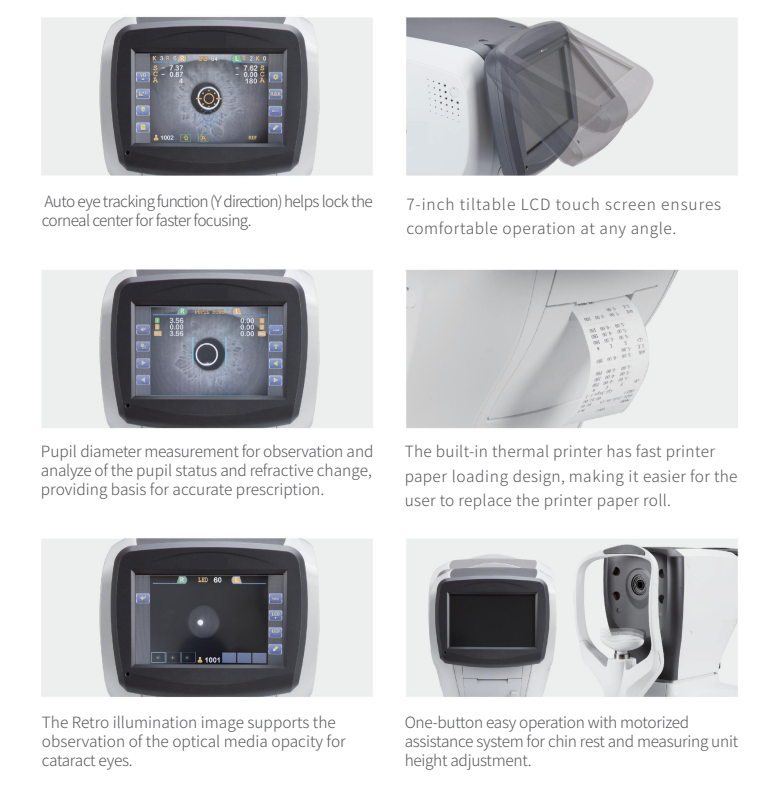
Cataract Screening: It can visually capture the radial/wedge-shaped shadows of cortical cataracts or posterior subcapsular cataracts in their early stages, assisting in assessing the morphology and extent of the opacity.
Corneal Disease Observation: It can clearly show corneal dystrophy, scars, neovascularization, and edema.
Contact Lens Evaluation: It can be used to observe deposits on the surface of corneal contact lenses (contact lenses) and the position and fit of the lens on the ocular surface.
3. Equipment Advantages (Advantages)
Objective and Intuitive: Doctors can not only obtain objective refraction values but also directly obtain high-contrast images of the eye's optical media. Early detection: Decreased visual function often begins with a decrease in contrast sensitivity. Backlighting can detect early, mild clouding before any abnormalities are detected on a visual acuity chart, which is very helpful in estimating the cause of blurred vision.